Pages

Showing posts with label Education. Show all posts

Monday, February 24, 2020

Creativity Lost


As a teacher, I have observed interesting trends in my career. One of the more frightening trends has been the fear of creativity. 
 When I first started teaching, the projects I would assign were very open-ended and allowed for much creativity. The projects ranged from mixing assignments to compositions. For example, an assignment might have a given theme in which the student would compose a piece of music inspired by the subject. Student submissions would range from hip hop, to rock, to jazz or even EDM. 
 In my observations, I have found that students feel more comfortable with rubricked assignments rather than open-ended creativity ones. For example, one of the assignments for a music technology course is to create a music concrete piece that used 6-10 original sounds. Music concrete is a style of music in which found object sounds are manipulated and altered to create an art piece. The students record the sounds and then shape and organize them into a piece of music. 
 But I think we can question if releasing the rubric to students has hindered the creative process. Students seemed focused on checking down the list of grading requirements rather than explore the possibilities of creating a unique piece of music. Since moving towards a more purpose-focused assignment paradigm, I have found that student engagement in the classroom has gone up since they now have to concentrate on proper usage of the tools instructed in class. 

These are the typical questions get.

Q: How long does the piece have to be?
A: I typically answer this question by referring to previous assignments. In my intro classes, I usually teach a variation of ABABB music structure revolving around a "B" segment of 16 bars. I often say that the project can be structured as the students wish. However, most students end up following the old structure rather than explore new musical arrangements. 

Q (Follow up): How long does the piece have to be to get an A?
A: "However long that you think it needs to be." The follow-up question is typical of 21st-century students. As students who are rubric driven try to navigate the more open-ended types of assignments, they focus on the grade rather than the creation. 

Q: How many tracks does it need to be?
A: "As many as you need to create your vision." Today's student often finds themselves paralyzed by open-ended rubrics. If the student does not have a specific goal to accomplish to which in this case would be track count, then they will either refer to a previous assignment or reask the question. 

Q: (Follow up) Can I still get an A with just one track since there is no minimum?
A: I liken this question to that scene in the original Jurassic Park movie, where the dinosaurs are testing the perimeter to look for weakness. This question is difficult to answer as a teacher because without an explicit assignment goal; you might have to answer yes. Is the purpose of your assignment to create a piece of unique music? If so, then a student could potentially make something highly unique without recording more than one track of audio or music. However, if the assignment goal is to teach the student to work with multiple tracks, then the answer would be no, and you would have to define a minimum. 

Q: Can I use samples?
A: A sample is a fragment of any commercially recorded music that is edited to down to a smaller portion. These samples would then be looped to create a piece of music that often closely resembles the original composition. I find that explaining the purpose of the assignment to the students gives them clarity about the focus, which, in this case, would be to develop a unique piece of music. 

Q: How should I process the sounds?
A: My response to this question is something like this: "As you wish." I often find that students are hesitant to put effects processing on their tracks. The main reason given by the students is, "I am afraid of being wrong." This lack of confidence could be due to inexperience with various effects. Giving the students low-pressure opportunities such as in-class assignments and exploration sessions would help the student gain confidence in applying the effect correctly. 

Q:(Follow Up) Did I process this sound correctly? 
A: My response to this would be, "Does it fit into the piece you are creating?" In my experience, this again points to a lack of confidence in using signal processing. However, in this case, the student is looking for guidance on the correct combination of effects that will lead to the high letter grade. I have found that if you say "yes, that is processed correctly," then the student will apply the same effects across all their tracks in their project. The goal is not to insert several effects as described in a recipe book, but to use them as treatments needed to achieve the desired tone. 

Challenge

 What these questions point towards is a lack of clarity with the purpose of the assignment. A rubric only gives the student your criteria for grading the homework. But disclosing the rubric can lead to "objective fixation," where the student only fulfills the requirements of the rubric and loses sight of the quality of the composition. Giving the students a clear purpose of the homework will lead to more creative assignments. We want the students to focus on how to use the tools, rather than just using the device for usage's sake. 

Wednesday, July 13, 2016

Why Pokémon is a Game Changer and How We Can Use This for Music, Art and Environmental Sustainability.

With all the hype over Pokémon Go launching from Niantic and Nintendo, augmented reality games might be here to stay.

There have been several attempts at delivering augmented reality mobile gaming like with Ghostbusters. However, Pokémon Go seemed to capture two important cultural keys.

Childhood Memories

The first is the connection to childhood memories. Pokémon are imaginary cartoon animals that you can train to battle other Pokémon. It is a modern version of what traditionally has been the Japanese pastime of catching insects. Originally from 1995, Pokémon was accessible via Gameboy and card games. This puts millennials right in the point of origin for the target market. Those that were of game playing age back then are now 30 -40 years old and have expendable income on smartphones and other technology. The game puts you in the first person, which is what other versions of this game lacked.

Culturally Significant Landmarks

It also uses geofencing technology to augment gameplay. Right now,  Niantic uses a propriety database of culturally significant landmarks as "PokéStops" where you can collect more "PokéBalls" (traps to catch Pokémon). In my home town which is an old mill city, most cultural landmarks such as bell towers and even Fenway Park are PokéStops. You can see people of all ages gathering around these areas to catch more Pokémon. If your business happens to be a Pokéstop, you have probably seen an increase of sales. Expect Niantic to receive sponsorships in the near future from major retailers to be listed as a Pokéstop.

Geofencing

Geofencing is where we can leverage music and arts. Geofencing is nothing new to apps or to art. In fact, two composers used geofencing to create a piece of music that centered around the Washington DC area. However, what happens if the music changes as we move closer or further away from an area? What happens if the speed at which we move changes the music? How do we program for this? How do we produce for this? Can a Pokéstop also educate?

These are important questions that Pokémon Go is creating. Even with the game in Beta, it didn't create as much of a cultural revolution like it did two weeks ago. People are outside and moving about, altering every perception of video gamers being a solitary hermit micro-society. Nintendo made a brilliant marketing move in the end. It knew it could not compete with traditional game consoles, so it brought the gamer away from the console.

What now?

If this trend keeps on going through the summer, prediction: expect to see more advertisements on the platform as well as high paying sponsors. We should also see service get smoother from Niantic which is having a very hard time handling increased server load. 

Prediction: The login credentials are currently through Google and Niantic's own portal. Expect to see a Facebook login key shortly. 

Long Term Change and Sustainability?

Prediction: We should also see a backlash from telecom companies on the amount of data this app is using. Similar to when Netflix went live with HD streaming, customers are going to push hard against data caps. If the telecom industry is smart, they will figure out a way to mitigate data overages for those customers willing to pay more. If the trend goes beyond 6 months, we can expect to see even more infrastructure installed in low coverage areas, because cultural significant landmark are in these areas. 


Solar:
We should also see improvements in mobile device technology. Right now, Pokémon Go is an absolute drain on battery life. If people are using this app with less access to wall outlets to recharge, Solar might be the answer. Prediction: Solar Cell mobile phone covers would allow for battery recharging without a wall outlet. Imagine people 


Friday, July 1, 2016

MSR in NYC closing July 1 2016; Why are all the big studio's are going out of business?

A few weeks ago, the NYC recording studio MSR announced it would cease operations as of July 1 2016.This comes on the heels of Avitar Studios (formerly The Power Station) announcing it was up for sale.Why are all the NYC recording studios going out of business? What has happened to the need for big budget studios?

Change in Economics

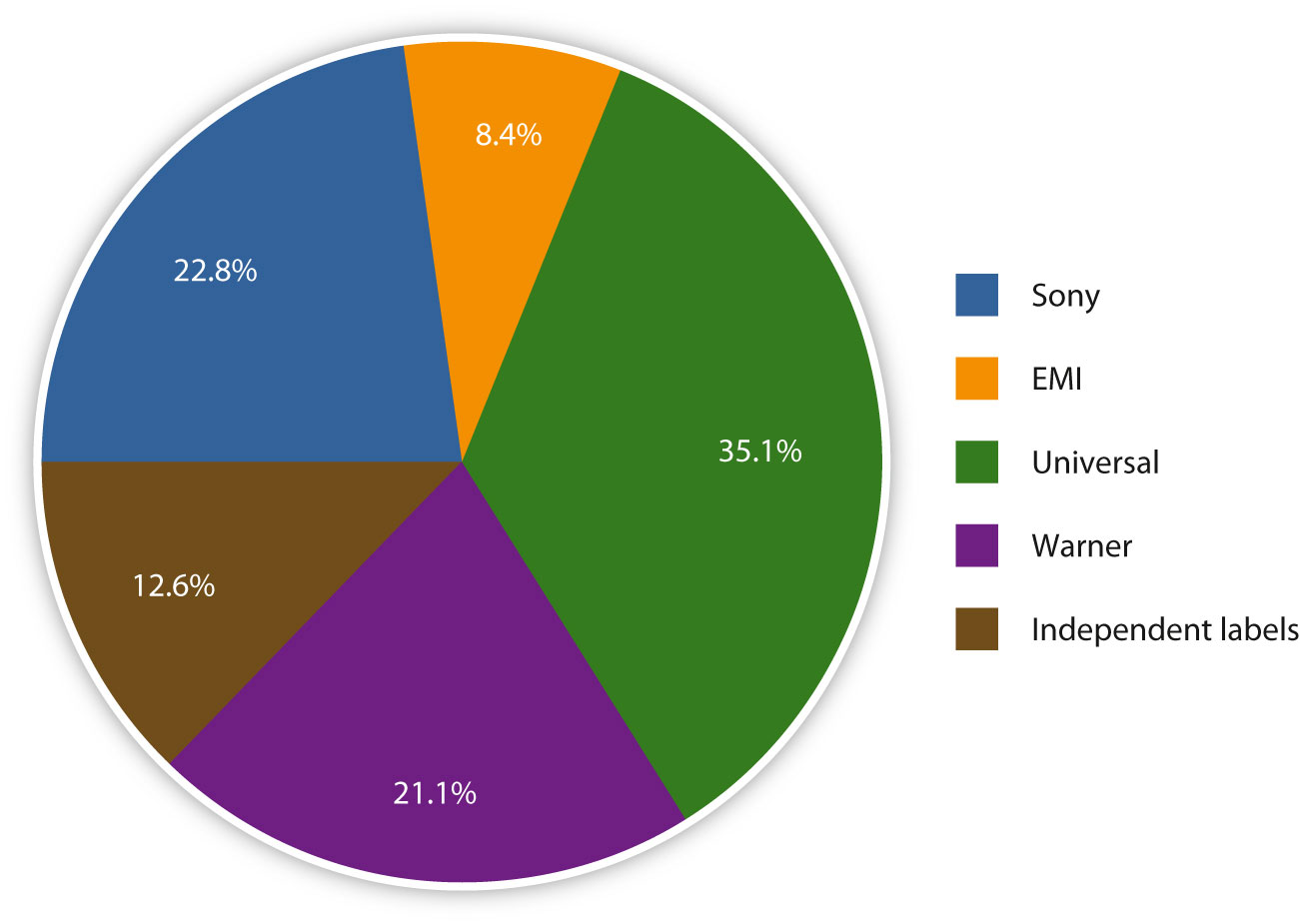
I believe the answer is in the question. The idea of big budget recording is no longer economically viable. Artists are losing support from the production companies as artists are choosing alternatives to publication(CD Baby, Distrokid, etc). Who needs a big publishing house when you can self-publish and avoid the royalty and publishing fees? This is not a new phenomenon as the book industry is currently going through this same dilemma: Independent and self-publishing is undermining big publishing.

No More Editorial Process

What we are losing is the big publishing editorial process. As record labels are downsizing, so is their acquisition and editorial staff. No longer willing to take chances on failure, record labels are mostly going for established artists and thus not needing an entire department of editors. Without editors, executives are again not taking chances on new artists. New artists are now turning to the self-publishing route and thus undermining the entire business model.
What are we left with? A plethora of music to choose from, but no vetting process. This means that you have to hunt for new music or music in a genera (or sub genera, or sub sub genera) you like.

Computing Cost vs Performance


With good equipment being inexpensive in today's market, highly trained audio engineers who graduate from universities and technical schools are producing music without the big budget studio. The paradigm of graduating high school and interning at a studio no longer works in today's market. Most studios want interns who are already college trained, thus reducing the learning curve and getting a more productive employee quicker.
The new millennial employee is also extremely computer literate, which makes the paradigm of analog recording almost obsolete. Why record analog when the computing power of non-linear editing is not only cheaper (no costs for tape), but highly cost effective in terms of staff time. If you don't need 80 hours per song to do basics and fix mistakes and only need 20 hours with digital recording, big studios are losing out on 60 additional billable hours.

So Now What?

The paradigm has changed. The old way of analog and big studio recording was too rigid and inflexible. We are now an industry of individual production. We see this with new artists emerging out of the EDM genera who produce their own music and are more successful than established bands working in the old label paradigm. What we can see however is that there is still a need for experienced mixers and mastering engineers. With the resurgence of vinyl record sales, the back end of the production process is still thriving.

The need for good sounding mix rooms is still driving most new construction but the purpose is more for mixing and mastering, not for recording. This might not be a bad thing, but recording studios need to adapt to the changing market, or find themselves facing extinction in the production market. 


Monday, October 5, 2015

Optimizing Ableton with Multiple Drives


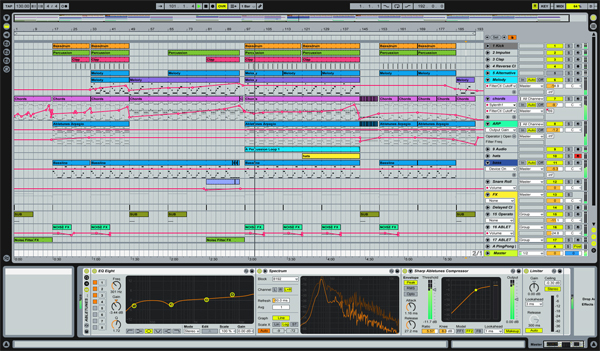
Do you use Ableton live for performance or recording purposes? Well, using multiple hard drives are the key to remove data collisions and bottlenecks that will reduce your artistic vision. Ableton recommends using 4 different hard drives for your projects. Make sure all the drives are formatted in your computer's native format:

1) System drive (SSD): This one should hold your program application
2) Samples and Libraries (SATA3-7200RMP): This one holds your packs, samples and sound libraries.
3) Audio Recording and Caching (SATA3-7200RMP): This is especially key if you are using higher bit rates for your audio recordings.
4) Backup (Any type): This is to have a backup of your files etc.

For information on how to set these in Ableton Live, check out the link below.

Ableton Help File

Monday, August 24, 2015

Press Release - iZotope Launches Mastering Academy with Jonathan Wyner


Audio professionals will learn how to produce their best-sounding masters through hands-on mentoring


Cambridge, MA.  iZotope, Inc., a leading audio technology company, is now accepting applications for its first-ever Mastering Academy event for audio professionals taking place July 23-25, 2015.

Led by iZotope's Education Director and GRAMMY-nominated mastering expert Jonathan Wyner (David Bowie, Howie Day), with special guest Adam Ayan (Carrie Underwood, Pearl Jam), this intensive workshop combines small-group instruction with hands-on practice. Personalized mentoring from Jonathan will help take students' mastering abilities to the next level.


The majority of the training takes place in iZotope's brand-new, fully equipped mastering studio in Cambridge, MA. In this acoustically optimized listening environment, participants will learn advanced mastering techniques and best practices on a full range of state-of-the-art equipment.

Students will analyze their own habits and patterns through feedback and insight from world-renowned mastering professionals. They'll also add new pro audio skills to their arsenal, learn time-tested strategies for dealing with clients, and grow their network of pro audio peers.

"It's a real thrill to be launching our first major learning initiative of this scale," says Jonathan Wyner. "Education has always been a personal passion of mine, so I'm looking forward to working with students individually. I'll be sharing strategies and techniques so they can tackle their next mastering project with greater confidence."

The event includes tours of iconic musical sites in Boston including Symphony Hall and Berklee College of Music.

Mastering Academy is the culminating event of iZotope's "Mastering Education" month. Throughout July, iZotope will offer events and resources designed to help audio professionals achieve better-sounding mastering results in their studios.

How to Apply:
Visit http://izotope.com/masteringacademy for more information and for application deadlines.

About iZotope, Inc.
iZotope makes innovative products that inspire and enable people to be creative. Based in Cambridge, Massachusetts, iZotope has spent over a decade developing award-winning products and audio technologies for professionals and hobbyists alike. Used by millions of people in over 50 countries, iZotope products are a core component of GRAMMY-winning music studios, Oscar and Emmy-winning film and TV post production studios, and prominent radio studios, as well as basement and bedroom studios across the globe. Through a robust licensing program, iZotope also powers products made by industry partners such as Adobe, Avid, Microsoft, and Sony. iZotope was recently honored with an Emmy® Award for Outstanding Achievement in Engineering Development for its flagship audio repair suite, RX®. For more information on iZotope products, please visit www.izotope.com.