Pages

Tuesday, November 23, 2021

Moving over to www.TheAudioPod.com®

 Thank you to all those on blogger who followed me during my website transition (which might have taken 10 years). You can now follow the blog with much more detail and search options at www.TheAudioPod.com

I look forward to seeing you over there!


Dr. Mike Testa. Ed.D

Monday, September 27, 2021

Beginning Mix Theory: Where Do I Put This Instrument?

 I get this question often: "Where do I put XYZ instrument in the mix?". The answer is complex. But there are standards that we follow in the music industry. For example, Kick, Snare, Bass, and Vocals traditionally sit in the middle of the mix. The reason stems from pure function. The Kick, Snare, Bass, and Vocals are the instruments that set the rhythm, tone and contain the message of the music. We would consider these instruments most important within the arrangement. 

Stereophonic sound reproduction requires two speakers, or two earbuds, or two sides of a headphone. Most people do not set up their home speaker systems correctly to get the full impact of stereophonic sound.  Imagine entering your grandmother's house or your friend's dorm room. Have you seen their stereo system set up where one speaker is in the living room, and one speaker is in the kitchen? When this arrangement occurs, the listener will only hear the instruments in the extreme left or right of the mix (depending on which room they are in). However, if the engineer pans the essential instruments in the middle of the stereo spectrum, the listener can hear those parts in both speakers or, in this example, both rooms. 

Engineers often think about the song mix as occurring on an imaginary concert stage or sound stage. 


To simplify the mixing process, we will split the stereo spectrum into five parts; Center, Left Center, Right Center, Left, and Right. 


The typical convention for stereo mixing is as follows: 

Center: 

Kick, Snare, Bass, Vocals, and a Solo if there is one. 

Left Center: Hi-Hat, Piano/Synth

Right Center: Mid Tom, Piano/synth

Left: Guitar 1, Left Cymbal Crash, Hi Tom

Right: Guitar 2, Right Cymbal Crash, Low Tom


Distance is more complex. Listeners identify instrument distance by both volume and frequency cues.  To simplify distance in this example, we will primarily focus on fader volume as a way to get started. This example will split the soundstage into three parts; near, middle, and far. 


Near: Vocals and Solo

Middle: Kick, Snare, Bass, Hi Tom, Mid Tom, Low Tom, Guitar 1, Guitar 2 (sometimes piano)

Far: Piano/synth, cymbal crash left and right. 


If we think about the sound stage as an XY grid, then panning is the x-axis, and volume is the y axis.


The audio mixer can now grid out the instruments in the song arrangement and balance them on the imaginary sound stage. 


Balance is determined by not having too many instruments on one side of the stage versus the other. If we have too many instruments on the right side of the stage, the mix is "heavy to the right," and vice versa. We aim to have every instrument occupy its own place on the imaginary stage. 

We simplified the mixing process to adjusting the volume and panning to put the instrument in its proper grid position. The closer the instrument, the more volume it will need. The further away from the listener, the less volume the instrument will need in the mix. 

This example is a starting point. Commercial mixes are more complex than this example. It is a good idea to grid out your mix first on a piece of paper to verify the soundstage balance. Then start your mix with the essential instruments in the center of the sound stage, and work your way to the less important instruments. When you get more proficient at mixing, the grid lines start to blur. A mix will then have a more cohesive blend as your mix skill improves. 

Sunday, September 27, 2020

Concerts in a post COVID-19 World; A model for a better streaming experience?


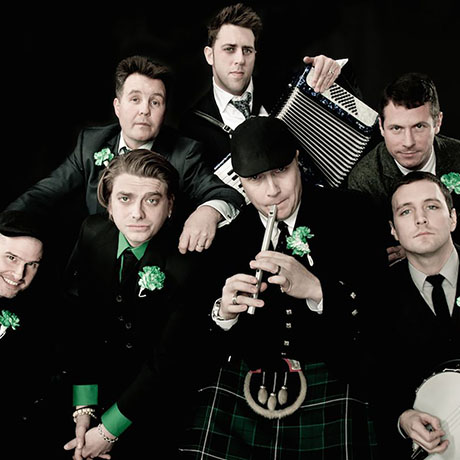
From May 26 through May 29, 2020, The Dropkick Murphy's and Mindpool Productions collaborated to produce a broadcast quality concert "Streaming out of Boston" in the intra/post-COVID-19 world. Prior to this date, the live music industry has been struggling to find some solution to bringing quality produced live music to a home audience without the musician in the basement look. The answer was an open-air baseball stadium not currently used for it's intended purpose due to the pandemic.  The venue has hosted major musical acts in the past, such as Bruce Springsteen, The Rolling Stones, and Paul McCartney, to name a few. However, the concerts were in the traditional stage and audience format we were all used to attending. This concert by the Dropkick Murphys did not have a stage nor audience, and the musicians were roughly 15-20 feet apart, and the final output was to streaming broadcast. The logistical challenges were unique for both the venue, the production company, and the band. This article looks to document best practices throughout the planning and execution of this concert using the CDC guidelines for preventing COVID-19 exposure.  


The Players

The planning of this concert was the idea of the Dropkick Murphys. They approached Mindpool initially to produce this show. Josh Adams, the owner of MindPool Live "The Dropkick Murphys, reached out to me and said, Hey, we're thinking about doing this. Is this something you would consider or be interested in? And you know, right away the conversation has turned to, you know, how are we going to do this with safety in mind? And once we all realized we could put a safety plan in place, that's when things started to go forward."

The concert staff consisted of three groups: The Dropkick Murphys and their backline staff, the MindPool Live crew, and the production crew. Mindpool was in charge of the overall production. Video Productions was assisting Mindpool with the technical direction of the show as well as providing playback and access to the main video board in centerfield. Along with this, video productions were also in charge of some graphics and transmission lines to broadcast. 

However, there were significant crew health questions that needed addressing. How could we do this safely without getting the crew, the band, and other workers sick? Was additional personal protection equipment (PPE) needed, and who needed it? Who was going to pay for that equipment? How do you safely let musicians and crew use restroom facilities? How do you divide and isolate certain parts of crew members to avoid cross-contamination between crew groups? 

Planning

The first step in the planning process was designating crew areas and limiting contact between other crews. "Everybody had a color-coded assignment that defined workspaces. Josh said, "we had assigned bathrooms per group of workers, so there was no cross-sharing of bathrooms." Secondly, the city of Boston had a few public safety rules in place, mainly the number of people in an area at one time and a citywide curfew of 9:00 pm. The venue was only allowed to have 35 people total in the park at one time. This included band members, working staff, security, and park detail. "The part that took it the next level was identifying work times, adding much more time that is normally needed for a load in because everything was taking a lot longer. We used half as many people, and we took twice as much time," said Josh. Time management became a crucial component of the concert at every level of the crew's organizational chart. Also, the decision about which team member was allowed to be onsite and allowed to work remotely became a key factor. "Our technical and production co-manager was off-site. It turned out to be a great decision. He wasn't getting pulled into a thousand other things. He was probably better able to coordinate than he would have if he were onsite because of just the rush of trying to get everything done, and that was a pleasant surprise." Said Josh. Other Mindpool members worked off-site in such capacity as graphic creation and editors. 

CDC Guidelines

The CDC recommends a multi-step approach to preventing the spread of the virus from person-to-person. As of the date, this article was written, the virus spreads through "close person-to-person contact (within 6 feet) through respiratory droplets when an infected person coughs, sneezes, or talks. These droplets can land in the mouths or noses of people who are nearby or possibly be inhaled into the lungs. Some recent studies have suggested that COVID-19 may be spread by people who are not showing symptoms."

Dr. Eric Osgood, Medical Director at Physician Practice Enhancement and front line COVID-19 doctor in Trenton NJ, commented: "I believe the first law of safety in the COVID-19 pandemic is 'behave as though you are asymptomatically carrying it,' so assume your respiratory droplets are loaded and act accordingly to protect those around you and everyone they interact with."

To prevent the spread of the virus, the CDC recommends these preventative measures:

1) Wash your hands often. If you are not near a hand washing station, use a hand sanitizer with at least 60% alcohol. Avoid touching your face with unwashed hands. 

2) Avoid close contact. Maintain a 6-foot minimum separation between you and another person. 

3) wear face coverings. Face coverings could be cloth or surgical in the material.

4) Clean and disinfect surfaces with EPA registered household disinfectants. These surfaces include all workstations, equipment, and commonly touched surfaces like doorknobs and light switches. 

5) Monitor your health. Take your temperature daily and look for common symptoms of COVID-19, such as: 

  • Fever or chills
  • Cough
  • Shortness of breath or difficulty breathing
  • Fatigue
  • Muscle or body aches
  • Headache
  • New loss of taste or smell
  • Sore throat
  • Congestion or runny nose
  • Nausea or vomiting
  • Diarrhea

The Venue

Upon entering the venue, workers were asked to complete a health screening survey before driving to the facility. The survey asked the following questions: 

"Have you, or anyone you have been in contact with, had a positive test or presumptive positive test for Covid-19 in the last 14 days?"

"Have you had any signs or symptoms of a fever in the past 24 hours, such as chills, sweats, or had a temperature that is elevated for you/100.0F or greater?"

"Are you experiencing any of the following symptoms? 

Fever chills or repeated shaking with chills

Sore Throat

New Cough (not related to chronic condition)

Nasal Congestion or Runny Nose (not associated with seasonal allergies)

Muscle Aches

New Loss of Smell or Taste

Shortness of Breath or Chest Tightness (that is new/unusual to you)"


Musician Plot and Layout

There were some unique characteristics of playing in a baseball stadium. First, the stadium is an open-air facility. The crew and Musicians had plenty of space to operate safely with plenty of fresh air. Because of the pandemic, no major league sports were in operation at the time of this concert. Thus, the band had use of the infield, which is typically off-limits to concerts during the season. The musicians were able to set up 15-20 feet apart as if they were positions on the baseball diamond. Technical tents were set up near the dugouts and were roughly 40 feet away from the closest musicians. Musicians wore face coverings until they got to their stations on the field. 

Because the musicians were playing on the infield, most of the equipment sat upon plastic flooring used to protect the infield dirt from scaring. This synthetic flooring also protected the amplifiers from sitting directly on the crushed clay of the baseball diamond. The singers were allowed to sing on the infield grass and, on occasion, the pitcher's mound. Again, this allowed for 15-20 feet of distance between each musician at all times during the performance. 


Day of

Once you passed the screening questionnaire, you had to print out or provide a screenshot to the security gate. At the security gate, all workers were wearing face coverings and gloves. Security asked each individual to stand in front of a thermal camera, which took the person's temperature. If the temperature was below 100 deg Fahrenheit, the worker was then cleared to pass through the gate. Once the person passed through the metal detectors, they were provided a sticker, which indicated which zone they worked in and which restrooms you were assigned. 

Inside the park, employees wore masks at all times, and Clorox wipes were available at each workstation. Hand sanitizer stations were visible at each doorway and consistently refilled by the cleaning staff. Bathroom floors, walls, and fixtures were washed and sanitized with industrial power washers and cleaning products every 3 hours.


Load-in

Load-in for a concert or production is often a carefully choreographed in pre-COVID19 conditions. In post COVID19, it was more complicated (insert a quote from A1). All stage hands wore masks and gloves. Most of the time, the stage workers were socially distant except when cases required a two-person carry. Small 10x10 tents were set up for the technical crew off to the side near the dugouts. These tents only had top coverings, and all four sides were exposed to the open air. 


Set up

The set up of the instruments and microphones occurred just like any other live concert would have. Instrument techs set up amplifiers and road cases in position according to the plot provided. Audio crews set up microphones and monitors while video production crews set up robotic cameras at each musician station. The most significant disadvantage to the stage crew was the distance needed to travel from the equipment staging area to its final position. (insert stage crew quote) Since the musicians would be on the baseball infield dirt, all equipment had to be moved by hand and carried as not to damage the turf. Again, each worker wore a face covering.  

Once the band's equipment was in place, Audio and Video placed microphone cables and video cables in the positions outlined in pre-production. Each band member (except for the singers) had robotic iso cameras. A video engineer on the field controlled these. Each band member had an individual monitor speaker and a singing microphone. Audio FOH also placed microphones in front of speaker cabinets, in front of bagpipes, and over the drums at this time.


Sound Check Camera and Blocking

Musicians wore face coverings while on the sidelines, while walking to their equipment and until they were ready to play. Because of the distance between the performer and their amplifiers, the soundcheck continued to be socially distant. Performers were able to play their instruments while tech crews adjusted microphone positions and cameras far enough from musicians to be well outside the CDC recommended 6-foot distance. 

Four camera technicians operated the hard patched Triax cameras. One camera operator was above the field in the high home position frequently used during baseball broadcasts. Two other operators were on the ground about 120 feet away at the edge of the wall and infield foul territory. One camera person was operating a wireless hand-held Sony XD camera and was able to move to different positions. This operator observed all social distancing rules and had frequent communication with the director about blocking positions that were creative yet safe to both themselves and the band. 

The concert, Breakdown, and Loadout

The show was rehearsed and executed with minimal changes to the original format. The final output stream was delivered to BrightCove, a back end service provider. Viewers were able to view the concert on various social media platforms (Facebook, Twitter, YouTube, and Twitch)

During the breakdown, the same precautions were taken as during the setup. Staff still wore face coverings and gloves. Equipment was cleaned and wiped down as typically would be during an outdoor concert. 

Crew members were socially distant and packed each piece of equipment inside road cases while rolling them out individually. 

As for the band's performance logistics, Jon Marcantonio, monitor engineer, said that precautions were taken even with the instruments. "Yes, we were constantly wiping everything down we touched, everyone stayed in their own “zone,” nobody used anyone else’s mics, and we stayed masked up all day. There were no direct instrument handoffs, their next instruments were left in stands behind them, and in some cases, guitar changes were made by musicians tossing guitars across the field at techs. Note: The guitar was caught every time."


Challenges and Recommendations for Future Concerts

According to the CDC, the first line of defense is frequent hand-washing. In addition to hand sanitizer, portable wash stations closer to the worksite for crew members would have an even more significant impact. Dr. Osgood recommended a good rule of thumb is to wash your hands often, for a minimum of 20 seconds. 

Masks and face coverings made it very difficult for open-air communication. "Generally, standing so far away from people you’re trying to communicate with was a challenge," said John Marcantonio. Once wireless communication was established, crew members were able to talk a bit easier to each other. Masks often block out the high-frequency portion of the voice spectrum, usually where the intelligibility of speech lies. Assigning every crew member a headset microphone and headphones might make communication a lot easier with face coverings. 

Manual labor with face coverings proved extremely challenging. Often heart rates get up around 120-160 depending on the task. That challenge will be something that managers need to monitor for crew safety and best practice effectiveness. 

In terms of people management, Josh Adams found that the required level of planning was more significant than he anticipated. "The biggest challenge is that you just can't do anything that you're used to doing. You have to plan everything, including meals. We couldn't have a food service because we couldn't ensure an environment where we could feed everybody safely. So workers had to bring their meals and social distance while eating." Additionally, with a limited crew, Josh stated that he would add a day to the load in process in future concerts and plan to use even more space between technical crew stations.  

As for taking temperature for crew members, Dr. Osgood said, "as far as using temp of 100.0 - temp guidelines vary state to state, I would use oral temp of 99.5 as a cutoff which some states have done, this was the cutoff for temp used in the original studies coming out of China. I would also advise caution with those forehead gun thermometers for people working outdoors in the sun, which will give you false fevers." Some states do allow a "cool off period," giving the worker a chance to re-test in the case of a false fever. Check your local guidelines as they vary from state to state. 

Conclusion

Mindpool demonstrated entertainment production could happen while closely observing the CDC guidelines for preventive COVID19. Caution is still needed to ensure performer and crew safety as the CDC recommendations are there to minimize the risk of transmission, but not eliminate it. Crew members can always be asymptomatic and be within the infective window; thus, not all risk can be minimized. Proper planning is essential. Reducing exposure between crew groups through pre-production planning and project management is a crucial component of risk mitigation. Ensuring that crew members follow safety protocols is where thoughtful leadership will set the example. Our goal in the production industry is to provide quality production and entertainment to an audience starving for art in the time of this pandemic. It is our responsibility to produce that art safely to all those involved. 

Wednesday, September 23, 2020

Officially Trademarked!


Today, after 12 years, the United States patent and trademark organization granted theaudiopod.com an official trademark, capping off a very long process. 

This blog is gone through a lot of iterations. From being a technology review to focusing more on Twitter, finally in its current iteration as an education blog.

I'm extremely proud of where this blog is come over the past twelve years and also extremely for your readership. you've allowed me to bounce ideas off of you and helped me grow as an audio engineer, music producer, and educator. We have a great name, and now this name will stay with the blog for a very long time!

Monday, February 24, 2020

Creativity Lost


As a teacher, I have observed interesting trends in my career. One of the more frightening trends has been the fear of creativity. 
 When I first started teaching, the projects I would assign were very open-ended and allowed for much creativity. The projects ranged from mixing assignments to compositions. For example, an assignment might have a given theme in which the student would compose a piece of music inspired by the subject. Student submissions would range from hip hop, to rock, to jazz or even EDM. 
 In my observations, I have found that students feel more comfortable with rubricked assignments rather than open-ended creativity ones. For example, one of the assignments for a music technology course is to create a music concrete piece that used 6-10 original sounds. Music concrete is a style of music in which found object sounds are manipulated and altered to create an art piece. The students record the sounds and then shape and organize them into a piece of music. 
 But I think we can question if releasing the rubric to students has hindered the creative process. Students seemed focused on checking down the list of grading requirements rather than explore the possibilities of creating a unique piece of music. Since moving towards a more purpose-focused assignment paradigm, I have found that student engagement in the classroom has gone up since they now have to concentrate on proper usage of the tools instructed in class. 

These are the typical questions get.

Q: How long does the piece have to be?
A: I typically answer this question by referring to previous assignments. In my intro classes, I usually teach a variation of ABABB music structure revolving around a "B" segment of 16 bars. I often say that the project can be structured as the students wish. However, most students end up following the old structure rather than explore new musical arrangements. 

Q (Follow up): How long does the piece have to be to get an A?
A: "However long that you think it needs to be." The follow-up question is typical of 21st-century students. As students who are rubric driven try to navigate the more open-ended types of assignments, they focus on the grade rather than the creation. 

Q: How many tracks does it need to be?
A: "As many as you need to create your vision." Today's student often finds themselves paralyzed by open-ended rubrics. If the student does not have a specific goal to accomplish to which in this case would be track count, then they will either refer to a previous assignment or reask the question. 

Q: (Follow up) Can I still get an A with just one track since there is no minimum?
A: I liken this question to that scene in the original Jurassic Park movie, where the dinosaurs are testing the perimeter to look for weakness. This question is difficult to answer as a teacher because without an explicit assignment goal; you might have to answer yes. Is the purpose of your assignment to create a piece of unique music? If so, then a student could potentially make something highly unique without recording more than one track of audio or music. However, if the assignment goal is to teach the student to work with multiple tracks, then the answer would be no, and you would have to define a minimum. 

Q: Can I use samples?
A: A sample is a fragment of any commercially recorded music that is edited to down to a smaller portion. These samples would then be looped to create a piece of music that often closely resembles the original composition. I find that explaining the purpose of the assignment to the students gives them clarity about the focus, which, in this case, would be to develop a unique piece of music. 

Q: How should I process the sounds?
A: My response to this question is something like this: "As you wish." I often find that students are hesitant to put effects processing on their tracks. The main reason given by the students is, "I am afraid of being wrong." This lack of confidence could be due to inexperience with various effects. Giving the students low-pressure opportunities such as in-class assignments and exploration sessions would help the student gain confidence in applying the effect correctly. 

Q:(Follow Up) Did I process this sound correctly? 
A: My response to this would be, "Does it fit into the piece you are creating?" In my experience, this again points to a lack of confidence in using signal processing. However, in this case, the student is looking for guidance on the correct combination of effects that will lead to the high letter grade. I have found that if you say "yes, that is processed correctly," then the student will apply the same effects across all their tracks in their project. The goal is not to insert several effects as described in a recipe book, but to use them as treatments needed to achieve the desired tone. 

Challenge

 What these questions point towards is a lack of clarity with the purpose of the assignment. A rubric only gives the student your criteria for grading the homework. But disclosing the rubric can lead to "objective fixation," where the student only fulfills the requirements of the rubric and loses sight of the quality of the composition. Giving the students a clear purpose of the homework will lead to more creative assignments. We want the students to focus on how to use the tools, rather than just using the device for usage's sake. 

Monday, March 25, 2019

Money

I did gig about 5 years ago where the CEO of a big company asked what motivated his employees to work hard? He answered for them "Money! We all like Money! If we didn't like money, we wouldn't be here..."

This comment really stuck with me to this day. It might have been a throwaway line" to this big CEO, however, it resonated with myself because it has never been a motivation to my work in all honesty. I was really lucky to know what I wanted to do for my career at an early age. I always played piano and in high school my teacher Mr. Hamill took us on a field trip to Berklee college of Music. Here I found out what Music Engineering was and I immediately fell in love. I was a science geek in grade school and loved music as well. My decision was set firm, I wanted to be an audio engineer so I could use technology and play with music at the same time.

Throughout my high school career, I directed every decision I made to get into music college and get into a music engineering program. When I finally did, my college career was dedicated to getting a job in the industry so I could sit behind a console, play with buttons and have the ultimate control over electrons and sound pressure waves.

Money was never my motivation, money always seemed to be there, it might never have been enough, I might have been "poor" in some people's eyes but I never was homeless and I never went hungry. I always made my car payments and I had some extra to take my girlfriends to a nice dinner. I had a 401K, a stable income, but it was not my "motivation" for working. I would have done the work for free, because that's what I always wanted to do, I could never dream about doing anything different.

I wasn't a dummy however. The first thing I did when I got out of college is hired an accountant to do my taxes because I was self employed and freelancing. I was lucky to have a great mentor who taught me about tracking expenses and not letting people walk all over you. "Get paid what you are worth, and don't take anything less than market value because undercutting the rest of us will get you on the 'I don't want to work with this guy' list real quickly." he said. So what did I do?

I worked for free...
To a point...

When I needed more experience, I worked for free. When I felt comfortable, I used "standard rate". This showed my clients that I was serious about the work, and not just the Money... because I was serious about my art. But, I found that my clients not only respected this but were more apt to pay standard rate despite my little experience at the time because they saw the time investment I put in.

So, after hearing this speech by Mr. CEO, I rechecked my money situation. I'm still ok. :) The money is there, not much of it, but it's there and I am comfortable with my life and my career. So, Mr. CEO... Money doesn't motivate me, but it's a nice byproduct of enjoying what I would be doing normally.


Monday, March 18, 2019

Working with Virtual Guitars


Recently I have been experimenting with a lot of virtual plug-ins for guitar. Let's look at why the guitar is such a unique instrument and why it sounds so good through an amplifier.


Feedback
The biggest interaction we see with the electric guitar and amplifier system is the feedback loop that is inherent. The sound produced by the metal strings is picked up by the pickups, then fed down the guitar cable into the amplifier, which then produces a much higher SPL into the room. This sound then has the potential to hit the guitar strings again and sympathetically vibrate them causing the sound to be picked up again by the pickups. This is very apparent in the traditional metal guitarist holding his or her guitar up to an amplifier to get the system to feedback. Even when far away, the slight feedback loops that occur at higher frequency levels contribute to the overall sound of the guitar, thus something that is lacking with an electric guitar plugged directly into a computer or tablet and using a virtual instrument to produce the amplifier tones.

Recording
When recording, the interaction of the guitar and the amplifier as well as the floor producing some interesting reflections and feedback options. Particularly, as Alex Case stated in an AES journal entry, the interaction with the floor and vs the direct sound from the amp produces a comb filtering effect which can either aid or hamper the recording process.

So, we can use this interaction to be part of the tone, or we can try to reduce the interaction by adding carpeting, raising the amp or reducing the distance of the mic from the amplifier. We can also play with the distance to see if the overall tone might be improved due to the enhanced comb filtering.

Least Significant Bit
The other issue that we have with virtual amplifiers is the problem of the quantization effect of the least significant bit. Think about it this way, you have a light dimmer, as you turn the dimmer up, more light comes into the room. This is analog. in digital, you have to flip the light switch many times a second to get the light to continuously be in the room. In a digital recording system, we have to worry about what happens at the 0 to 1 Bit portion of the bit depth plot. When the audio signal dips below the 2 and 1 bits because it is reducing in volume, the computer remembers acts as 1's and 0's, electricity on or off. At 1 bit, it still thinks this audio is "on", but below the 1 bit, in analog, there is many decimals for the audio to hang out at before it goes to nothing. In digital land, it is an electrical limbo, and the computer is not sure what to do with it. We get a quantization error. To overcome this, we put a virtual noise floor called Dither into the 0-1 bit depth, so technically the computer is always quantizing and sampling, it never stops and shuts off the light switch.

But in recording the guitar, the natural interaction of the amplifier which might make those last notes ring out a lot more; would be cut off by this quantization error and reduce the signal below the dither protocol, thus we might have reverb tails end quicker and less natural.

What can you do?
How do we make those virtual guitars sound more natural? There are a couple of steps we can do.

1) Add a small amount of delay with significant feedback to the guitar in order to extend those big long drawn out notes. This will help the virtual plugin handle the LSB (Least significant bit) and extend your distortion or FX times to a more natural sound

2) Add reverb pre-virtual plugin. This doesn't really apply to fast runs, but for those long drawn out notes and chords, it sure will. Automate the reverb in so it only pops in during the parts where you are struggling with keeping the guitar sustained.

In the end, we use virtual instruments for a number of reasons; we live in apartments and can't make loud noises, we want to change the tone of a sound, we don't know how to play the guitar so we use an instrument we can play and try to make it sound like a guitar. However, nothing can replace a well-played guitar, but if we think about the specifics of what makes it such an awesome instrument, then we can sure try to get close.


Monday, March 11, 2019

Welcome Back!

Wow, I can not believe it has been so long since I posted on here.

Let me first talk about what I have been up to.
Over the past 3 or so years, I have been focusing on writing my dissertation at U Mass Lowell. This process has been extremely time-consuming. Not only has it entailed long nights, but very early mornings and many hours in safe writing spaces, ie: Starbucks, libraries and other distraction-free zones. Now, as I am starting to transition out of that process into the real world again, I find myself wanting to explore writing and education with renewed vigor.
I have also accepted a tenure track position at Salem State University as the Coordinator of Music Technology. This has also been time-consuming but very rewarding as I am working with some amazing students and some amazing colleagues.

New Direction
As I have been thinking a lot about how to get the message of music technology out to a greater audience, I found myself exploring Twitter, Instagram and ultimately, coming back to this blog. When I started this in 2007, I had an idea of this blog being a reposting hotspot for industry news. Now, as I see it 12 years later, this blog should be about a personal journey of growth and education. I am TheAudioPod and it is me, and all of you. We learn things, we grow and we evolve as time goes on.
This is where I want to take this blog. I want to use this platform for inspiration and to help you all create music and art in a way that is unique and appropriate for your message.

Updates
Well as you can see, the updates make this blog a bit more hip (well maybe not). New Logo, new color scheme and a more mature voice (hopefully). I am excited to take this journey with you into creativity and look forward to interacting with you on a deeper experimental level.

In the meantime, visit myYouTube and check out some of the things I have been doing over the past 2-4 years. Hopefully, you can gain some insight and be inspired to create!

See you soon

Mike