Pages

Thursday, August 31, 2017

Full AES New York 2017 Convention Schedule Online

Full AES New York 2017 Convention Schedule Online – the Big Apple Experiences Maximum Audio Beginning October 18


The full technical program and event list is now online for AES New York 2017. Hundreds of sessions are available to Convention registrants, with All-Access registration giving access to all the onsite sessions and the exhibition — affording the Maximum Audio experience. With the AES New York Convention less than 60 days away, now is the time to register and make plans to join us at the Jacob Javits Convention Center, October 18 - 21. AES New York 2017 will be co-located with the NAB Show New York 2017, and registration for AES New York 2017, including at the Exhibits-Plus level will give attendees access to the NAB Show New York exhibition floor and the content in the NAB Show New York’s Core Package (a $75 value). Register now, and reserve housing, for the 143rd AES Convention at aesshow.com. Online pricing discounts end soon. Join us as we take Maximum Audio to the next level!

Wednesday, July 19, 2017

DPA Microphones Heats Up the Frozen Desert for Documentary, Antarctica, A Message from the Other Planet


When Nerio Gutierrez, co-owner of Madrid-based production company, Playground Estudio, was given the challenge of producing a documentary about Antarctica's view of the world, he knew he was going to be up against some of the most extreme weather conditions. In order to capture the unique sounds and ambience of this harsh, frozen land, he turned to a selection of microphones from DPA Microphones for the documentary titled Antarctica, A Message from the Other Planet.

"The most important thing in a project like this is to be sure that your tools will respond in any condition without any worries," says Gutierrez. "We faced extreme cold, extreme moisture and extreme winds, but our DPA d:dicate 4017B Shotgun, d:dicate 4011C Cardioid and d:screet 4061 Necklace Microphones worked incredibly well and gave us the best sound we could possibly get from a place like Antarctica. One of the most amazing experiences we had was using our DPA mics to capture tiny snowflakes flying around with absolutely nothing else around. This was an incredible sound and there is no doubt that we were only able to catch that kind of detail thanks to our DPA microphones." 

For the documentary, the crew spent six weeks aboard the Spanish Navy's scientific vessel, Hesperides. They also spent time on the continent itself as well as on several islands recording sounds from penguin colonies, whales, zodiacs, sea wolves, marine elephants, icebergs, winds and Drake's Passage (the wildest sea in the world).

Wednesday, July 13, 2016

Why Pokémon is a Game Changer and How We Can Use This for Music, Art and Environmental Sustainability.

With all the hype over Pokémon Go launching from Niantic and Nintendo, augmented reality games might be here to stay.

There have been several attempts at delivering augmented reality mobile gaming like with Ghostbusters. However, Pokémon Go seemed to capture two important cultural keys.

Childhood Memories

The first is the connection to childhood memories. Pokémon are imaginary cartoon animals that you can train to battle other Pokémon. It is a modern version of what traditionally has been the Japanese pastime of catching insects. Originally from 1995, Pokémon was accessible via Gameboy and card games. This puts millennials right in the point of origin for the target market. Those that were of game playing age back then are now 30 -40 years old and have expendable income on smartphones and other technology. The game puts you in the first person, which is what other versions of this game lacked.

Culturally Significant Landmarks

It also uses geofencing technology to augment gameplay. Right now,  Niantic uses a propriety database of culturally significant landmarks as "PokéStops" where you can collect more "PokéBalls" (traps to catch Pokémon). In my home town which is an old mill city, most cultural landmarks such as bell towers and even Fenway Park are PokéStops. You can see people of all ages gathering around these areas to catch more Pokémon. If your business happens to be a Pokéstop, you have probably seen an increase of sales. Expect Niantic to receive sponsorships in the near future from major retailers to be listed as a Pokéstop.

Geofencing

Geofencing is where we can leverage music and arts. Geofencing is nothing new to apps or to art. In fact, two composers used geofencing to create a piece of music that centered around the Washington DC area. However, what happens if the music changes as we move closer or further away from an area? What happens if the speed at which we move changes the music? How do we program for this? How do we produce for this? Can a Pokéstop also educate?

These are important questions that Pokémon Go is creating. Even with the game in Beta, it didn't create as much of a cultural revolution like it did two weeks ago. People are outside and moving about, altering every perception of video gamers being a solitary hermit micro-society. Nintendo made a brilliant marketing move in the end. It knew it could not compete with traditional game consoles, so it brought the gamer away from the console.

What now?

If this trend keeps on going through the summer, prediction: expect to see more advertisements on the platform as well as high paying sponsors. We should also see service get smoother from Niantic which is having a very hard time handling increased server load. 

Prediction: The login credentials are currently through Google and Niantic's own portal. Expect to see a Facebook login key shortly. 

Long Term Change and Sustainability?

Prediction: We should also see a backlash from telecom companies on the amount of data this app is using. Similar to when Netflix went live with HD streaming, customers are going to push hard against data caps. If the telecom industry is smart, they will figure out a way to mitigate data overages for those customers willing to pay more. If the trend goes beyond 6 months, we can expect to see even more infrastructure installed in low coverage areas, because cultural significant landmark are in these areas. 


Solar:
We should also see improvements in mobile device technology. Right now, Pokémon Go is an absolute drain on battery life. If people are using this app with less access to wall outlets to recharge, Solar might be the answer. Prediction: Solar Cell mobile phone covers would allow for battery recharging without a wall outlet. Imagine people 


Friday, July 1, 2016

MSR in NYC closing July 1 2016; Why are all the big studio's are going out of business?

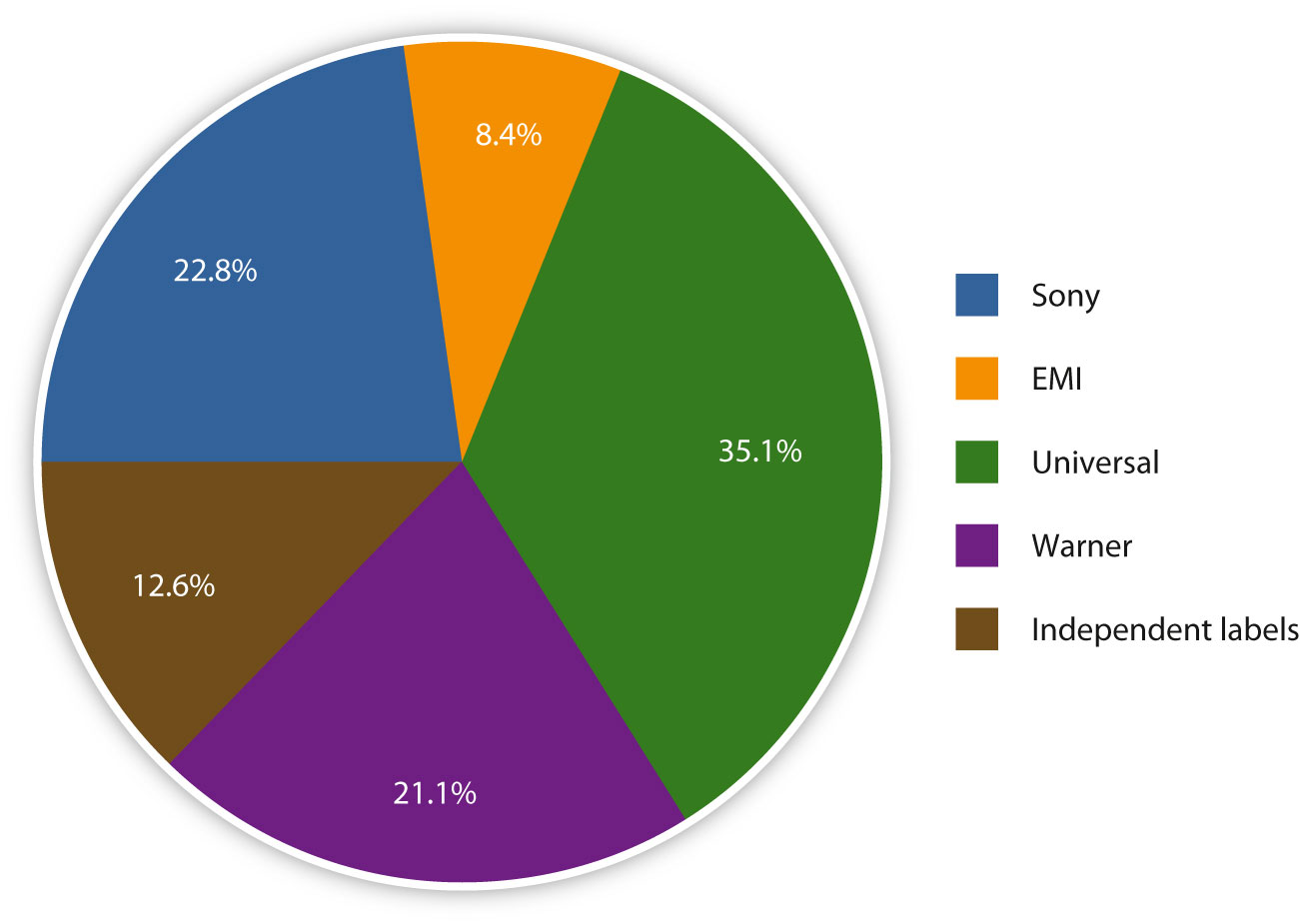
A few weeks ago, the NYC recording studio MSR announced it would cease operations as of July 1 2016.This comes on the heels of Avitar Studios (formerly The Power Station) announcing it was up for sale.Why are all the NYC recording studios going out of business? What has happened to the need for big budget studios?

Change in Economics

I believe the answer is in the question. The idea of big budget recording is no longer economically viable. Artists are losing support from the production companies as artists are choosing alternatives to publication(CD Baby, Distrokid, etc). Who needs a big publishing house when you can self-publish and avoid the royalty and publishing fees? This is not a new phenomenon as the book industry is currently going through this same dilemma: Independent and self-publishing is undermining big publishing.

No More Editorial Process

What we are losing is the big publishing editorial process. As record labels are downsizing, so is their acquisition and editorial staff. No longer willing to take chances on failure, record labels are mostly going for established artists and thus not needing an entire department of editors. Without editors, executives are again not taking chances on new artists. New artists are now turning to the self-publishing route and thus undermining the entire business model.
What are we left with? A plethora of music to choose from, but no vetting process. This means that you have to hunt for new music or music in a genera (or sub genera, or sub sub genera) you like.

Computing Cost vs Performance


With good equipment being inexpensive in today's market, highly trained audio engineers who graduate from universities and technical schools are producing music without the big budget studio. The paradigm of graduating high school and interning at a studio no longer works in today's market. Most studios want interns who are already college trained, thus reducing the learning curve and getting a more productive employee quicker.
The new millennial employee is also extremely computer literate, which makes the paradigm of analog recording almost obsolete. Why record analog when the computing power of non-linear editing is not only cheaper (no costs for tape), but highly cost effective in terms of staff time. If you don't need 80 hours per song to do basics and fix mistakes and only need 20 hours with digital recording, big studios are losing out on 60 additional billable hours.

So Now What?

The paradigm has changed. The old way of analog and big studio recording was too rigid and inflexible. We are now an industry of individual production. We see this with new artists emerging out of the EDM genera who produce their own music and are more successful than established bands working in the old label paradigm. What we can see however is that there is still a need for experienced mixers and mastering engineers. With the resurgence of vinyl record sales, the back end of the production process is still thriving.

The need for good sounding mix rooms is still driving most new construction but the purpose is more for mixing and mastering, not for recording. This might not be a bad thing, but recording studios need to adapt to the changing market, or find themselves facing extinction in the production market.