Pages

Monday, June 13, 2016

Press Release- Antelope Audio Announces Partnership with BAE Audio, as Company Prepares Imminent Release of Authentic, Vintage Product Emulations

Santa Monica and North Hollywood, Calif.,
May 18, 2016 — Clocking, conversion and Effects technology expert Antelope Audio has announced a partnership with BAE Audio wherein the two companies will collaborate on delivering authentic digital emulations of some of the most classic vintage recording gear. The digital emulations, which utilize Antelope's proprietary FPGA engine, will enable users of Antelope's Orion Studio, Zen Tour and Goliath to access faithful recreations of the originals— without ever having to reach for a piece of outboard gear or software plug-in.


The first emulation to be introduced is the BAE Audio 1073 EQ, a classic preamplifier/EQ known for its authentic transformers and authentic, premium grade components based on original specifications. The EQ from the BAE 1073 will become available this week at no additional charge for owners of Antelope's new Thunderbolt interfaces. Over the coming days and weeks, Antelope Audio will be announcing several more digital emulations, including BAE's entire range of EQs and compressors, which the company says will have a revolutionary impact on the traditional plug-in market.


"We believe that BAE Audio has created the very best modern version of the vintage 1073," commented Marcel James, Director of U.S. Sales for Antelope Audio. "Therefore BAE was the obvious choice for us to partner with on this and other upcoming products based on their established pedigree. The company's reputation precedes itself, as evidenced by the mountains of BAE gear routinely being used in top studios and on many hit records — oftentimes right alongside the original 1073’s. We look forward to a long and fruitful relationship."

Antelope’s emulations, which are unique on the market and utilize a proprietary FPGA engine, enable real-time effects processing before a signal even reaches the DAW component. This allows users to access authentic digital emulations of the most classic hardware in real time without buffering. This technique, which Antelope's research team has been developing for years and which is present in all of Antelope's new interfaces, uses it’s hardware FPGA circuit to recreate the characteristics of vintage analog circuits, maintaining the true feel and response of real hardware.  Antelope’s FPGA is an actual digital hardware processor, avoiding the need for buffered plugins which add undesired latency and often artifacts to the sound.  

Mark Loughman, President of BAE Audio, commented on the new partnership: "We’ve been approached by many companies on doing digital emulations in the past, and have always been hesitant on the 'company fit'. When Antelope approached though, it was different — we use their converters in house for demos and testing, and are intimately aware of the quality and innovation in their products. We knew Antelope would be able to capture the essence of the original BAE 1073 better than anyone else on the market and we are very pleased at the result."


For more information on Antelope's new interfaces featuring BAE Audio emulations and the company's parallel processing technology, please visit http://www.antelopeaudio.com.

Monday, June 6, 2016

Why we are losing all the great musicians


Prince, Bowie, Lemmy, Nick Menza, John Berry, Phife Dawg, Keith Emerson.


Looking at the Tributes.com and the Telegraph.co sites, the list of stars we lost in the last 8-12 is impressive. However, as our music heroes of our childhood age, we shouldn't be surprised that we are starting to lose them in some numbers. Let us take a look at some of the likely reasons for this.


  • The 1960-1980's were prolific times in music and culture. Because of this, those celebrities dying now were 20-40 at the time. This puts the celebrities at approx 70 years old right now.

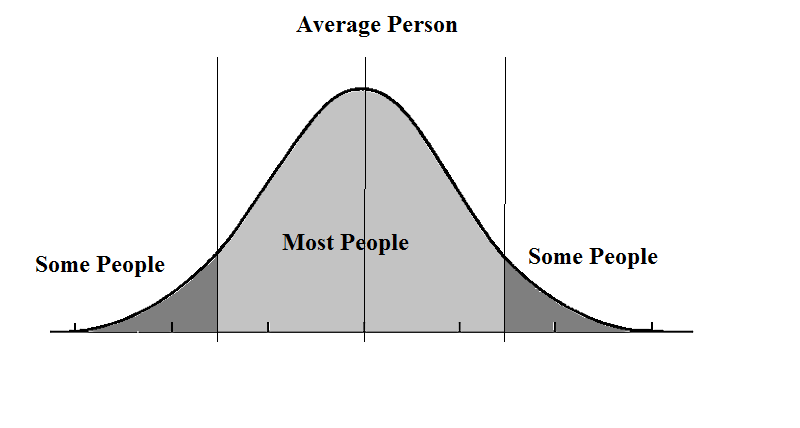
  • Statistically, as of 2015, the average USA life expectancy is 76 for men and 81 for women. If we look at the two lists for celebrity deaths, we can see an average age of about 68 years old. This means, that we are at the start of the celebrity bell curve. We statistically should start to see more celebrity deaths in the coming 5 years or so. 


  • Those that are about 70 years old as of 2016 are known as Baby Boomers. " More babies were born in 1946 than ever before: 3.4 million, 20 percent more than in 1945. This was the beginning of the so-called “baby boom.” In 1947, another 3.8 million babies were born; 3.9 million were born in 1952, and more than 4 million were born every year from 1954 until 1964 when the boom finally tapered off. By then, there were 76.4 million “baby boomers” in the United States. They made up almost 40 percent of the nation’s population." (History.com)

  • Baby boomers were the original "YOLO" (You Only Live Once) generation for which you were split into two groups: you were either fighting for social justice and equity, or part of the hippie movement. Growing up under the threat of nuclear destruction by the cold war, baby boomers tended to live life to the fullest. This includes the rock stars born on in this generation. A demanding life of hard drugs, partying and long tour travel is starting to catch up with baby boomer celebrities. We statistically see this.
So, statistically, this is not good news for the musical legends in this age range. We will lose more as time goes on, and possibly more frequently. However, the great thing about recorded music is that an artist's emotional memory will carry on through their work. We will always have their music to fall back on a connect to our own trials and tribulations. This is all part of the circle of life.

Thursday, May 26, 2016

Minimalism in Production

On May 3rd of 2016, I had the opportunity to go to a special screening of a documentary called "Minimalism" which was based on the blogs, essays, and books of Joshua Fields Millburn & Ryan Nicodemus.

They catalog personal accounts of becoming a minimalist by discussing their high paying corporate jobs and subsequent jarring life event which forced them to rethink their initial path; which inevitably led them to a more intentional lifestyle. Their story is compelling and life altering. It has forced me to rethink how much "stuff" I have and how to downsize in order to focus on more important things. If you are interested in learning more, I recommend starting with their blog and podcast at the same time. This combination paints the best picture of their lifestyle.

This got me thinking about minimalism in music production, specifically, those of us with home studios. How much "STUFF" do you have? Here was my simple list

13 guitars
4 keyboards
5 computers
30 XLR cables
50 misc cables
30 TRS/TS cables (various lengths)
400 CD's
100 books
30 Stomp Boxes
100 random assorted cables

If you are an audiophile like me, then you might have something very similar, including microphones and outboard gear. But in reality, how much of it do we need? The problem is, we hold value to things that might not have value at all. For example, out of my 13 guitars, only 1 held a value over $350. What was I holding on to?

I realized that my work space and my home space were stifling my creativity. Here was literally my thought on May 2nd, 2016: "I really should do some work on that intro song on my album, but my desk is a mess and I really don't feel like cleaning it. I just want to write. Oh well, I will just play some Fallout 4 instead".

On May 10th, I did something radical; I packed up most of my accessories and gear. I then only took out 2 of each thing, or as many as I would possibly

Q: Each guitar/mic/didgeridoo has their own timbre.


A: I did an experiment with this. I chose one guitar, an Ibanez RG series. As I plugged it in and recorded some pure tones from it, I challenged myself to try to mimic the pure tones out of my other 12 guitars using just this one guitar. The result: I was able to. What did this teach me?

That my ears were the most important commodity I had, not the guitar. If I was able to replicate most of the sounds using a combination of EQ, multi-band compression, and different distortion plug-ins, then, in reality, I didn't need 12 other cheap guitars.

Q: But I paid $500 for that thing!

A: If you have ever tried to sell something on eBay, you know that the actual market value vs the retail is very skewed. I paid $550 for an Epiphone Les Paul Thru Body Sun Burst guitar back in 2001. The guitar was immaculate and sounded just like a Les Paul. However, on the market, used, this was only worth about $150-200. I attached a value to it that was not reasonable. When we buy something from Guitar Center or any retail shop, it is steeply marked up. Once you walk out the store with it or let the money back guarantee expire, the item automatically loses most of its value. I really had to look at my stuff as sunk money costs.

Q: But I might need that for a future album!

A: Minimalism teaches the 90/90 rule. If you have used the item in the past 90 days, or will use it in the next 90 days, then keep it. If not, donate it or sell it. I was holding about 110 cables I havn't used since recording a full drum kit in my old studio almost 10 years ago now. The most cabling I use is to my guitar amp and my Korg Kronos now. I did hold onto enought to connect everything at once, and then 1 spare. I only have 20 cables total now.

Q: Who would want this specialized equipment?

A: Schools. Most schools teach production, but don't have the budget to buy new equipment. If you donate the equipment to a school, then they can give you a receipt for a tax deduction. That tax dedution can be worth as much as reselling your equipment retail.
If you want cash in hand, eBay or Pawn Shop. Or donate the equipment to a donation center or thrift store. JUST GET A RECEIPT OF DONATION!

The Results

After about a month of cleaning up, I have noticed a significant amount of clutter gone. I have done this to other parts of the apartment and my girfriend is loving the change. The best way to describe the feeling is "freedom". Without the clutter and the extra stuff, we have been both creative with our free time. It is amazing to think that random objects could take away from creativity, but the truth is, visual clutter dosn't alow for creative flow because it takes your attention away from your creative idea. Now, don't get me wrong, I still have shorts, shoes, and t-shirts. I still have mic cables, microphones and a few guitars still, but I got rid of the excess and the things that didn't bring value into my life. The results were more creativity and produtivity... and more time to build better friendships relationships.

Monday, November 9, 2015

Press Release - iZotope Launches Ozone 7: Vintage-Inspired Mastering Tools


 iZotope, Inc., makers of award-winning software for audio production, now has released the latest version of their flagship mastering software, Ozone.

Ozone 7 is a set of essential mastering tools that enable both professionals and aspiring music producers to easily add a final level of polish to their mixes and audio recordings. While retaining the elegant workflow and precision audio processing of previous versions, Ozone 7 brings the best sonic characteristics of analog hardware to modern digital recordings.


Ozone 7 main Interface with dynamic EQ

The Ozone family of products includes both Ozone 7 and Ozone 7 Advanced, which includes additional features for gluing together a mix. Ozone 7 Advanced users can take advantage of four brand-new vintage-inspired modules, designed to add deep, rich analog character to digital recordings. Additionally, the new Codec Preview feature lets Advanced users audition the effect of industry-standard codecs on their master, making it easier to make necessary adjustments before exporting for digital distribution.

Ozone 7 Vintage EQ

By starting with Ozone's expansive collection of presets, pros and newcomers alike can quickly achieve authentic sounds in any genre. Through helpful visualizations and intuitive controls, the software aims to takes the guesswork and manual labor out of the mastering process, helping users experiment without fear of making the wrong sonic choices.

"Ozone 7 builds on iZotope's reputation for superior sound quality and mastering tools," says iZotope Product Manager Izzy Maxwell. "We've added new processing capabilities that honor all the aspects of vintage hardware that people love-warmth, saturation, character, richness-and reimagines them for the modern digital music production realm."


Ozone 7 Key Features:
  • Vintage Limiter: Glue a mix together, control dynamic range, and add character
  • Vintage Tape [Advanced only]: Add the distinctive sonic characteristics of analog tape to modern digital recordings
  • Vintage Compressor [Advanced only]: Add subtle warming and sweetening effects with a single-band, program-dependent vintage compressor
  • Vintage EQ [Advanced only]: Add the richness, warmth, and color of analog equalization to digital audio
  • Maximizer with new IRC IV mode: Increase perceived loudness without pumping or distortion with the mode's innovative new spectral shaping technology
  • Dynamic EQ: Now included in both versions of Ozone with improved features and optimized performance
  • A comprehensive bank of presets: Achieve authentic sounds for any genre and style and explore Signature Mastering Presets from Greg Calbi, the notable mastering engineer whose career spans from John Lennon to Bruce Springsteen to Lady Gaga and Tony Bennett
  • New export options: Encode mastered audio to MP3 and AAC formats

Ozone 7 runs as a standalone application, or as a plug-in in your audio editing software. Ozone 7 Advanced includes ten additional component plug-ins for direct access to individual Ozone modules in your host.

Pricing & Availability
Ozone 7 and Ozone 7 Advanced are available now at www.izotope.com/ozone and at select retailers.

Ozone 7 Advanced is also available as part of iZotope's Music Production Bundle with Insight, Alloy 2, Nectar 2 Production Suite, and Trash 2 (plus two Trash  Expansions). 

The Music Production Bundle, Ozone 7 Advanced, and Ozone 7 are on sale through November 11, 2015:
  • Music Production Bundle is available for $549 USD, €505 (reg. $599, €549)
  • Ozone 7 Advanced is available for $449 USD,  €429 (reg. $499, €459)
  • Ozone 7 is available for $199 USD, €185 (reg. $249, €229)
 Upgrade pricing can be found on iZotope's website, and owners of previous versions of Ozone can find their upgrade coupons in their iZotope accounts.


All customers who purchased Ozone 6 or Ozone 6 Advanced after August 26, 2015 will receive a free upgrade to the respective version of Ozone 7.